Criticism and Confidence
On academic conferences, imposter syndrome, and a love of learning

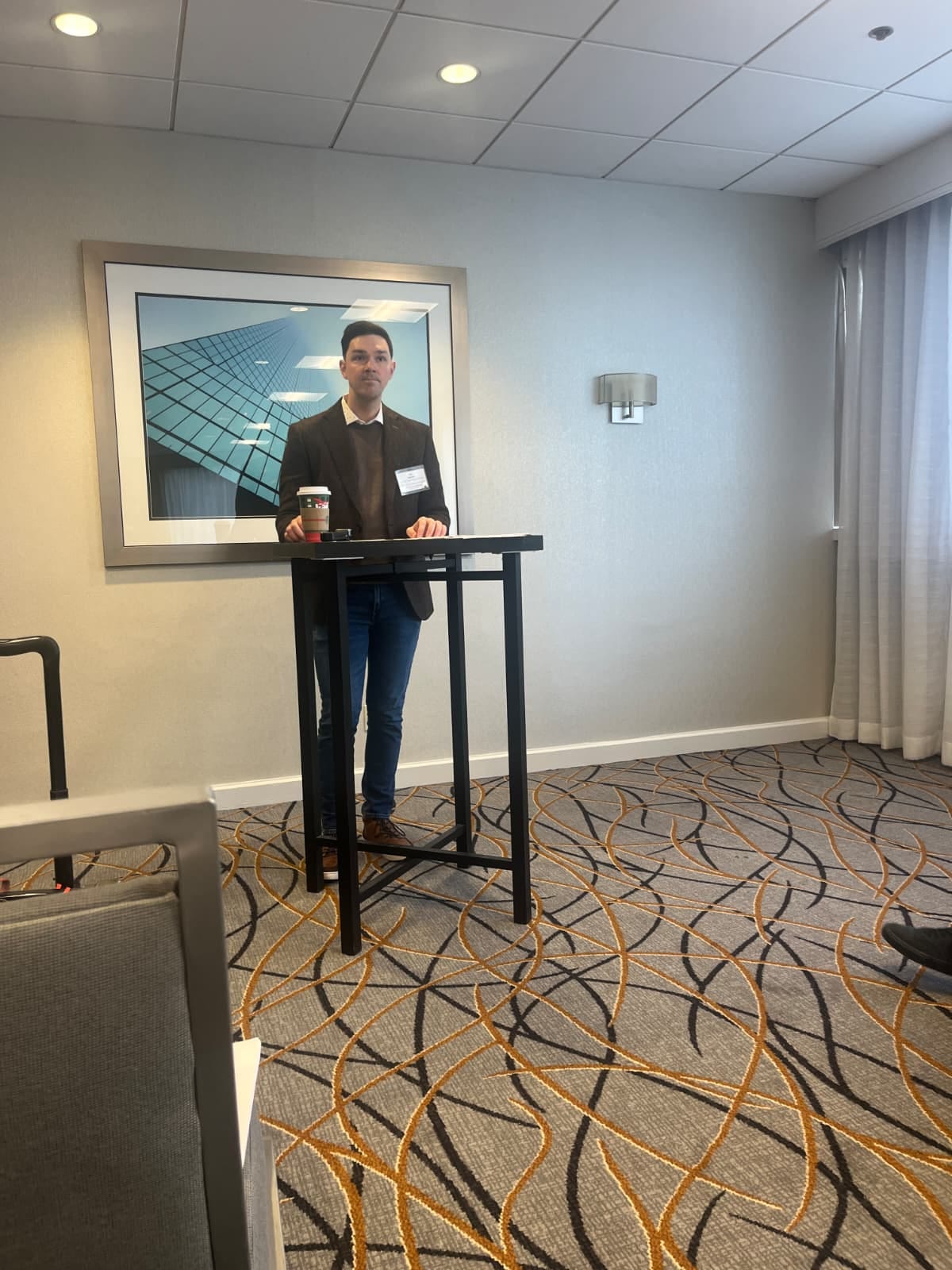
In November, my wife and I traveled to Boston for the annual meeting of the Evangelical Theological Society. For three days, evangelical scholars presented papers, discussed research, and explored the latest publications from a number of major publishers. The conference is every bit as nerdy as it sounds, and I love it.
I’ve attended the annual meeting a handful of times, but this year’s meeting was special in that it was the first time I was able to present a paper. I’ve presented at regional meetings a couple of times, and I learned a lot from those experiences. But the annual meeting felt like a bigger step. Regional meetings are much smaller than the annual meeting, and many of the attendees at the regional meeting, at least in my experience, come from the school hosting the event. At the annual meeting, however, scholars from all around the world are present, and they’re present in much greater numbers. This means that at the annual meeting, you’re more likely to engage those with expertise on your topic who can sharpen and critique your work. And while such sharpening and critiquing is one of the goals of presenting at the annual conference, it’s also a bit terrifying.
For example, it’s not uncommon for scholars you interact with in your paper to show up at your presentation. You could be critiquing a position while the author of that position is in the room. And because question and answer times are expected components of each presentation, you can’t hide from criticism. Feedback is part of the process.
This concept frightens me. Throughout my seminar work, I wrestled with imposter syndrome. And despite the knowledge that almost every doctoral student shares that struggle, it’s hard to shake the feeling that your knowledge and work are far inferior to that your colleagues. I’ve been in classes with brilliant students, and I’ve read masterful papers by those students. I’ve often felt inadequate as I’ve compared the weaknesses of my research to the strengths of theirs.
Things began to shift for me as I wrote my dissertation, in part because that process allowed me the time and space needed to flesh out my ideas and to make my project what I wanted it to be. I grew more confident as my chapters came together. But even with a completed document and an earned degree, I still found myself fearful as I prepared my paper for this year’s meeting. What if a scholar I critique shows up to my paper and says my presentation is a misrepresentation? What if I missed something in my research that undermines my conclusions? What if my work isn’t good enough?
When my presentation time arrived, I walked through my outline and shared my research. I felt good about the timing and flow, ending with a little over ten minutes for questions. A hand in the back shot up almost immediately and a man stood up. He began by noting his disagreement.
This was the kind of moment I’d feared.
And then he shared his reasoning, and I realized the sources he was referencing were sources I’d read and interacted with in the past. I was able to speak confidently to his concerns and answer his challenge in a way that satisfied him. After him, a few others asked questions, and I found I was able to dialogue with them too. Better still, the man who had initially pushed back was giving me a thumbs up as I further explained my position.
As the time for questions ended and we went into a short break, an older scholar walked up with his open Bible to ask about a particular passage of Scripture and how my model handled it. I was excited to learn that the passage he had in mind was one I’d spent some time on in my dissertation, and I was able to have a good conversation with him as he offered some suggestions for further research.
I walked away from the experience incredibly grateful, and I realize that the pushback I received helped to make the experience a good one. The thing I once feared became one of the things I most valued, reigniting a love of learning and a desire to research and to write. I learned, or maybe remembered, how much I love this work, and I’ve found myself wanting to read books I’ve largely set aside since I finished my degree. But I’ve also found what I think is a healthy confidence in my ability to do this work.
When I was wrestling with imposter syndrome in seminars, I was also wrestling with questions of calling and gifting. Am I really where God wants me to be? Am I actually gifted in these ways? Am I who I think I am, or have I misunderstood what God’s been doing in my life? Imposter syndrome doesn’t just affect your work; it can affect your identity.
But if the Bible is true, and I believe it is, then the Lord has equipped us for good works and has called us to use them for his kingdom. There’s much that can be said about calling and gifting, and I’m not going to get into all of them here. But one thing these truths mean is that you are not useless. You have something to contribute to this world. Because of the brokenness of this world, not to mention the work of the enemy, doubt and fear are going to be factors to navigate as we use our abilities. You’re not always going to be confident in your endeavors. You’re going to question your identity. You’re going to feel like an imposter as you pursue the opportunities the Lord has set before you. Sadly, these things are normal this side of eternity. I hope, though, that this story can be a reminder that the doubts, the fears, and the sense that you don’t belong are sometimes just part of the process of being faithful where God has placed you. They’re occupational hazards of the Christian life. But they aren’t the whole story. Be faithful anyway. Keep showing up. Keep doing the work. And trust that as you do the work the Lord has set before you, your labor is not in vain (1 Corinthians 15:58).